Salesforce CRM
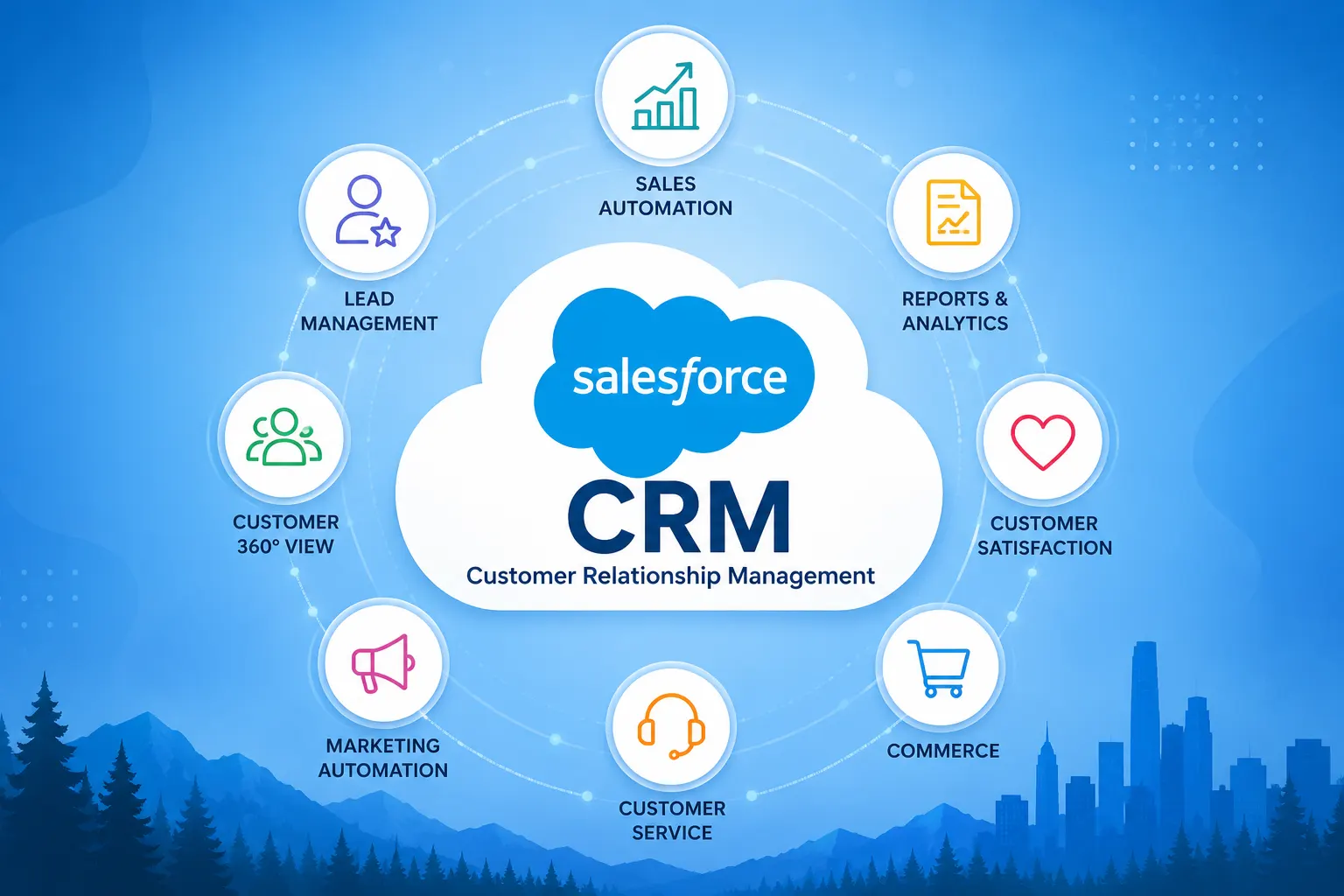
Introduction to CRM and Salesforce
In today’s digital world, businesses are no longer competing
only on products or pricing — they are competing on customer experience.
Customers expect personalized communication, faster support, and seamless
interactions across every channel. This is where CRM becomes one of the most
important tools for modern businesses.
What is CRM?
CRM (Customer Relationship Management) is a system that
helps businesses manage, track, and improve their interactions with customers
in one centralized platform.
A CRM stores customer information such as:
- Contact
details
- Purchase
history
- Emails
and conversations
- Support
requests
- Sales
activities
- Customer
preferences
This helps businesses understand customers better and build
long-term relationships.
Real-Life Example – E-Commerce Store
Imagine you visit an online shopping website, add products
to your cart, and leave without purchasing anything.
A few hours later, you receive an email saying:
"Hey, you left something in your cart!"
This is CRM in action.
The system tracked your activity, remembered your behavior,
and automatically triggered a follow-up email to encourage you to complete the
purchase. This improves customer engagement and increases sales opportunities.
Why CRM is Important for Your Business
In today’s competitive market, customers have endless
choices. Businesses that provide better customer experiences are the ones that
grow faster and retain loyal customers.
CRM helps businesses achieve this in multiple ways.
Builds Stronger Customer Relationships
CRM stores complete customer information in one place,
including:
- Purchase
history
- Preferences
- Previous
interactions
- Support
tickets
- Communication
records
This allows employees to provide personalized experiences
instead of generic interactions.
When customers feel understood and valued, trust and loyalty
naturally increase.
Business Benefits
- Better
customer satisfaction
- Personalized
communication
- Improved
customer loyalty
- Stronger
long-term relationships
Boosts Sales Performance
CRM helps sales teams manage the complete sales lifecycle
efficiently.
Sales representatives can:
- Track
leads
- Schedule
follow-ups
- Monitor
opportunities
- View
deal stages
- Manage
pipelines
This ensures that no sales opportunity is missed.
With better visibility into the sales process, teams can
close deals faster and improve overall revenue generation.
Business Benefits
- Faster
deal closure
- Better
lead management
- Improved
sales forecasting
- Increased
revenue
Saves Time with Automation
Many repetitive business tasks can be automated using CRM.
Examples include:
- Sending
follow-up emails
- Assigning
leads automatically
- Creating
reminders
- Updating
records
- Triggering
notifications
Automation reduces manual effort and allows teams to focus
more on customers and business growth.
Business Benefits
- Reduced
manual work
- Higher
productivity
- Faster
response times
- Improved
operational efficiency
Improves Marketing Accuracy
CRM helps marketing teams send the right message to the
right customer at the right time.
Businesses can segment customers based on:
- Interests
- Purchase
behavior
- Location
- Engagement
history
This makes marketing campaigns more targeted and
personalized.
Instead of sending generic emails to everyone, businesses
can deliver highly relevant campaigns that improve customer engagement.
Business Benefits
- Better
campaign performance
- Higher
conversion rates
- Improved
customer targeting
- Personalized
marketing experience
Core Products of Salesforce
Salesforce is one of the world’s leading CRM platforms. It
offers multiple cloud-based products designed for different business functions.
Sales Cloud
Sales Cloud helps sales teams manage:
- Leads
- Opportunities
- Accounts
- Contacts
- Sales
pipelines
It enables businesses to track deals efficiently and close
sales faster.
Key Benefits
- Lead
tracking
- Pipeline
management
- Sales
forecasting
- Opportunity
management
Service Cloud
Service Cloud is designed for customer support and case
management.
Support agents can manage customer issues across:
- Phone
- Email
- Chat
- Social
media
All interactions are managed from a single platform.
Key Benefits
- Faster
case resolution
- Omnichannel
support
- SLA
management
- Improved
customer service
Marketing Cloud
Marketing Cloud helps businesses create personalized
marketing campaigns through:
- Email
marketing
- SMS
campaigns
- Social
media
- Digital
advertising
Key Benefits
- Personalized
campaigns
- Customer
journey management
- Better
audience targeting
- Improved
marketing ROI
Commerce Cloud
Commerce Cloud helps businesses create seamless shopping
experiences for customers across online and offline channels.
Key Benefits
- E-commerce
management
- Personalized
shopping
- Omnichannel
commerce
- Better
customer experiences
Experience Cloud
Experience Cloud allows businesses to create:
- Customer
portals
- Partner
portals
- Employee
communities
- Branded
websites
Key Benefits
- Better
collaboration
- Self-service
portals
- Improved
customer engagement
Health Cloud
Health Cloud is designed specifically for healthcare
organizations.
It provides doctors and healthcare teams with a 360-degree
patient view.
Key Benefits
- Patient
relationship management
- Care
coordination
- Centralized
patient information
Loyalty Cloud
Loyalty Cloud helps businesses build customer loyalty
programs using:
- Rewards
- Memberships
- Points
systems
- Personalized
offers
Key Benefits
- Increased
customer retention
- Better
engagement
- Stronger
brand loyalty
Data Cloud
Data Cloud collects and unifies customer data from multiple
sources into one real-time customer profile.
Key Benefits
- Unified
customer data
- Real-time
insights
- Better
personalization
- AI-powered
intelligence
Agentforce
Agentforce is Salesforce’s next-generation AI-powered agent
platform designed to automate tasks, assist users intelligently, and improve
productivity using AI capabilities.
Key Benefits
- AI-powered
automation
- Intelligent
assistance
- Faster
issue resolution
- Improved
business efficiency
Salesforce Editions and Clouds
One of the biggest strengths of Salesforce is flexibility.
Businesses of all sizes can choose editions based on their requirements,
budget, and complexity.
Starter Edition
Best For:
Small businesses and startups
Starter Edition includes basic CRM functionality such as:
- Contact
management
- Lead
tracking
- Basic
reporting
It is ideal for companies starting their CRM journey.
Professional Edition
Best For:
Growing businesses with larger teams
Professional Edition provides:
- Better
customization
- Collaboration
features
- More
advanced sales processes
It supports business growth more effectively.
Enterprise Edition
Best For:
Mid-sized and large businesses
Enterprise Edition is one of the most widely used Salesforce
editions.
It provides:
- Advanced
automation
- API
access
- Deep
customization
- Workflow
capabilities
This edition gives businesses flexibility to build scalable
CRM solutions.
Unlimited Edition
Best For:
Large enterprises with complex business needs
Unlimited Edition includes:
- Premium
support
- Unlimited
customization
- Full
feature access
- Advanced
capabilities
It is designed for organizations requiring maximum
scalability and enterprise-level functionality.
Einstein 1 Edition (Unlimited+)
Best For:
Businesses that want AI-driven CRM
Einstein 1 Edition combines:
- Salesforce
CRM
- Einstein
AI
- Data
Cloud
- Slack
integration
This creates a highly intelligent and unified business
platform powered by AI and real-time customer data.
Conclusion
CRM is no longer optional for modern businesses — it has
become essential for delivering exceptional customer experiences and driving
growth.
Salesforce provides a powerful ecosystem of cloud-based
solutions that help businesses improve sales, customer service, marketing,
automation, analytics, and AI-driven operations.
Whether you are a startup or a large enterprise, Salesforce
offers the right tools, clouds, and editions to help your business build
stronger customer relationships, increase efficiency, and achieve long-term
success.